


Taxiarchis Church Of Kalyvia
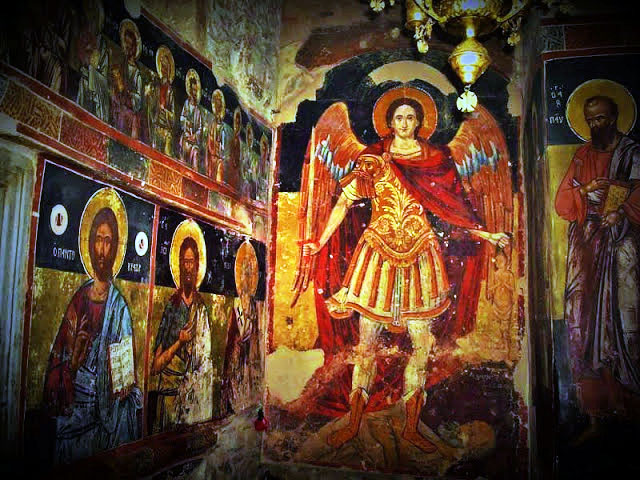
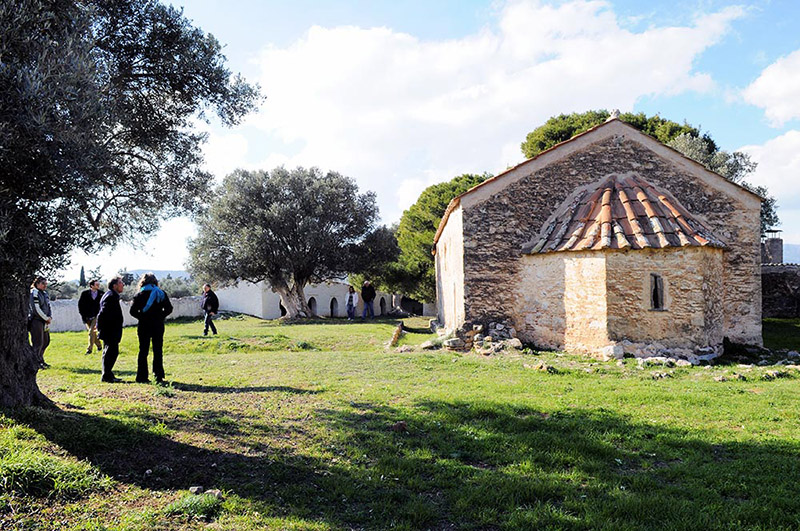
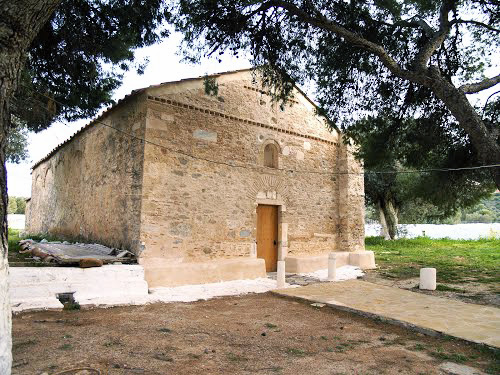


The Taxiarchis Church of Kalyvia (Church of Archangel Michael), dating from the 5th century AD, can be found near the little town of Kalyvia town, 50 kilometers east of Athens. This precious church is not open to the public, but on an EcoAthens tour you have the opportunity to step inside, feels its ancient spirit and admire the frescos as Lord Byron did in 1810 on his way to the Temple of Poseidon.
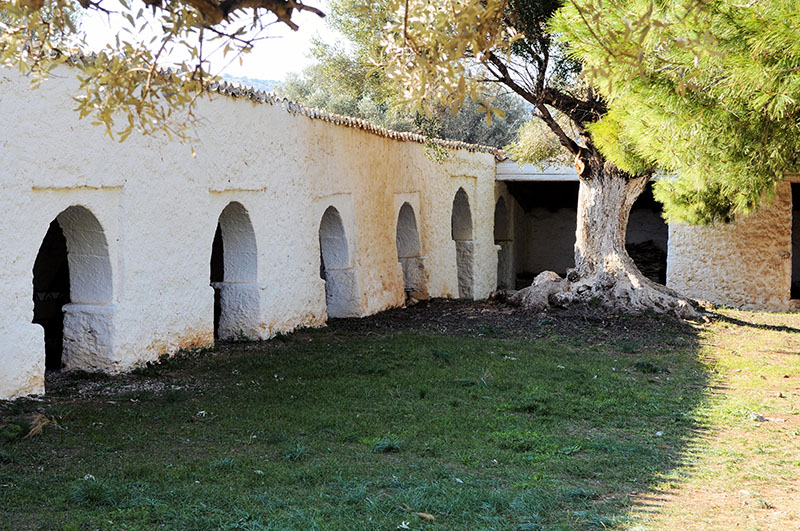
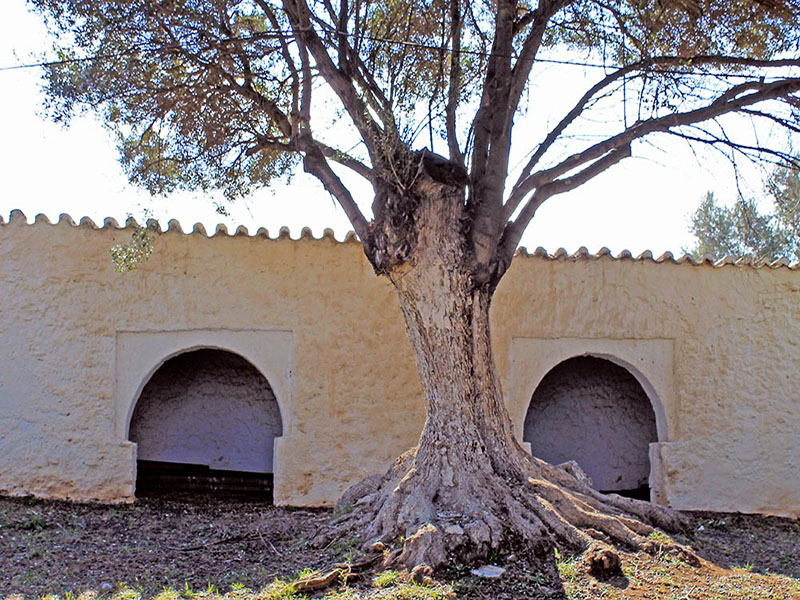
Lying in the center of a fairly open space, the church is surrounded by stone walls to the left and right side of the yard. Attached to the yard are a series of long, narrow constructions which used to be rooms for the monk-caretakers. Evidence indicates that in 1810 one of these rooms (cells) was used as a shelter by the British poet Lord Byron who stopped on his way from Athens where he was staying to the Temple of Poseidon in Sounion. If you visit the Temple of Poseidon be sure to seek out Lord Byron’s signature carved into one of the temple’s columns.
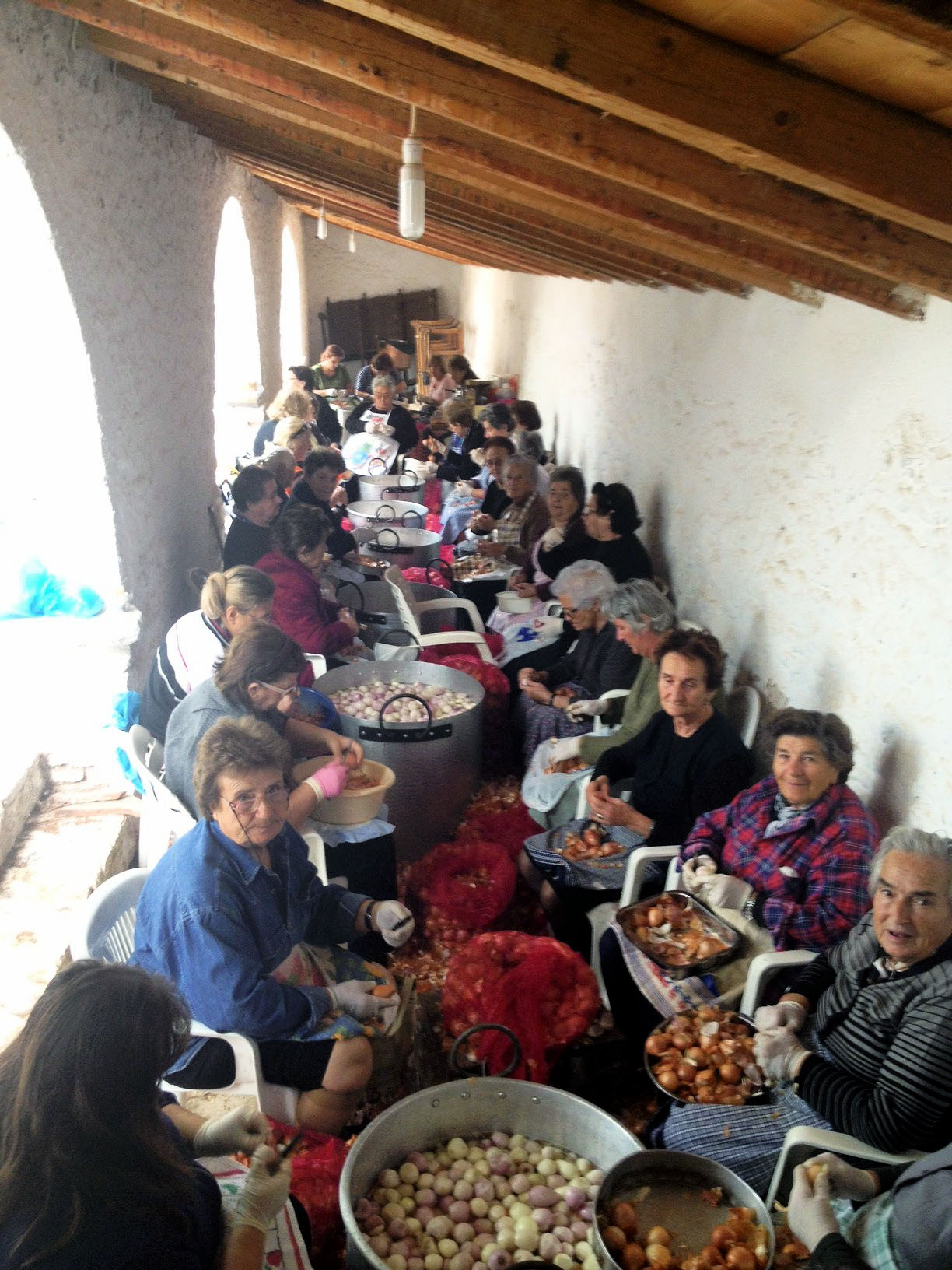
Religious services no longer take place in Taxiarchis Church, except for the Korbani. This event is traditionally held on November 8, the name day of the Archangel Michael, when the local people gather for food and the evening liturgy. The word Korbani has its original roots from the ancient Aramaic language and means the total funds for the sacred meal, and involves the food exchange or financial support for the special event.
Traditionally at the Korbani huge cauldrons of stewed meat with onions are prepared to give out to all the people who come to celebrate the Panagiri. The Panagiri is the name day of the saint or the archangel after whom the church is named, and if you are named after that saint, that day is your name day, too. It is usually the men who prepare and cook the meat, while women clean and chop the onions.
The Korbani tradition is one of the unique characteristics of the east Attika region and the area of Kalyvia in particular. The town is famous for its meat taverns. During the weekend you can find many Athenians here but especially on Fat Thursday (Tsiknopemti) when crowds come to the tavernas of Kalyvia to eat the best meat in all of Attika. From a religious point of view, particularly the Christian Orthodox traditions, Tsiknopempti is celebrated because it is the last day to indulge in meat before the forty day fasting period begins and lasts through Easter. People abstain from meat until Easter Sunday when lamb is eaten by everyone on that day.
The word Tsiknopemti (Τσικνοπέμπτη) has its origins from two words: Tsikno means a smoke from burning flesh and Pempti means Thursday. Who in the world would create a specific word dedicated to the distinct smell of grilled meat. Who, if not Greeks?

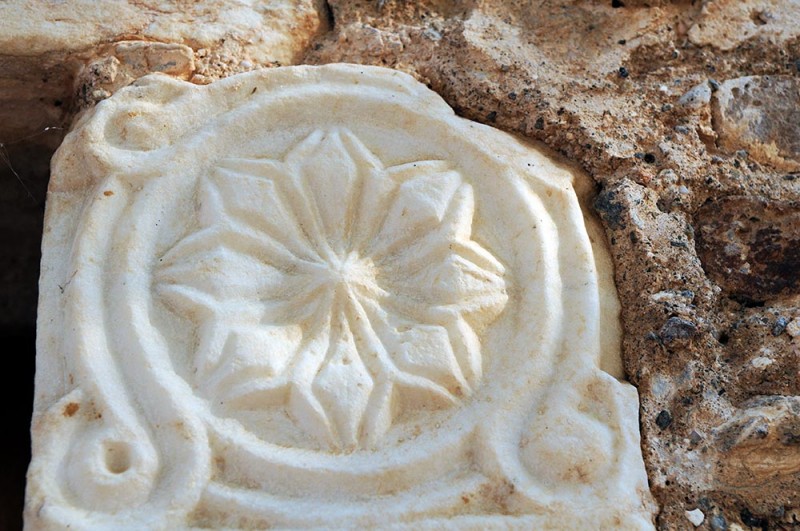
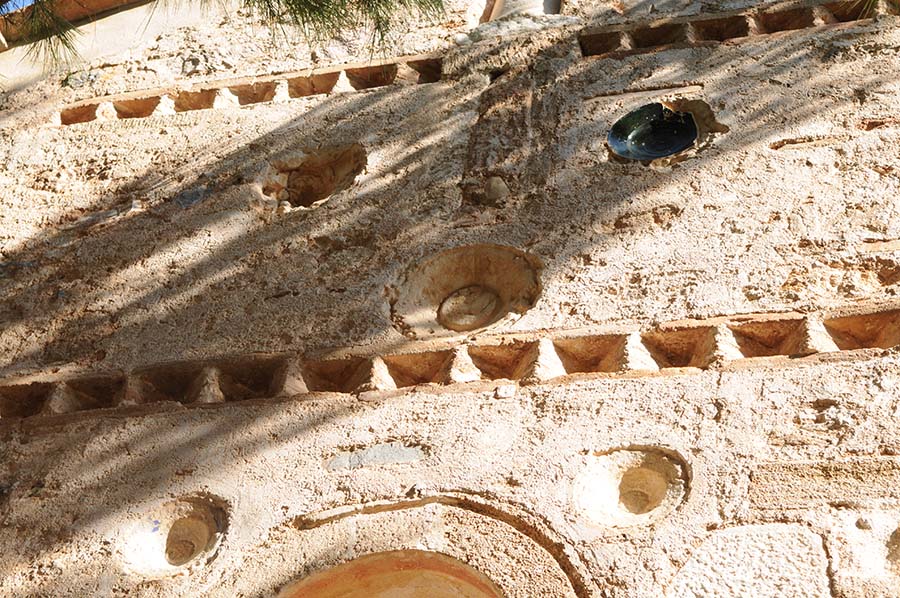
The Taxiarchis church in Kalyvia is a unique historical monument. It was believed to have been built in the early Christian period, in the 5th and 6th centuries AD, and rebuilt many times thereafter. It combines three architectural elements: the early Christian, Byzantine, and post Byzantine basilica.According to Professor Orlandos who investigated the church, there are some interior elements which are not characteristic of the Byzantine architectural style, such as fragments of the walls and the basement of a more ancient church. The most likely reason is that in older times locals used materials from ancient temples to make new structures. This technique is called spolia and is akin to recycling. However, plundering older structures to create new buildings is frowned upon by modern society even if it does resemble the encouraged practice of recycling.
The roof of the Taxiarchis church is made of wood from olive trees and covered with tiles on top. This is the general characteristic of the architecture style of the old Byzantine buildings around the Kalyvia. The elements of the wood (pine and olive trees) are also found inside of the stone walls of the church.
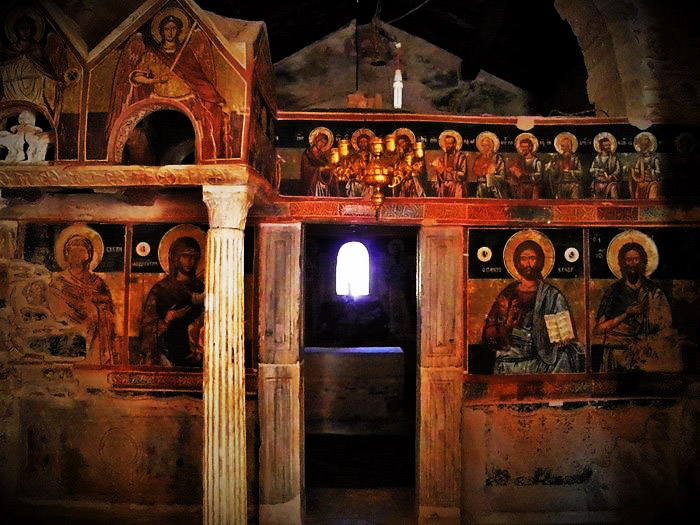
The iconostasis consists of two arrays; fluted columns with capitals decorated with acanthus leaves while the architraves area is decorated by the reliefs of birds and anims. The elements of flora and fauna are typical for the churches of the Archangel Michael who is also known as the Taxiarchis, the main Archangel. His mission is to protect the gate of the wonderful paradise with beautiful flowers and trees and in Ancient Greece the Acanthus leafs were symbols of heroes. Because of its thorns, only brave people were not afraid to touch it by hands. According to the mythology, the acanthus was growing on the graves of Heros.
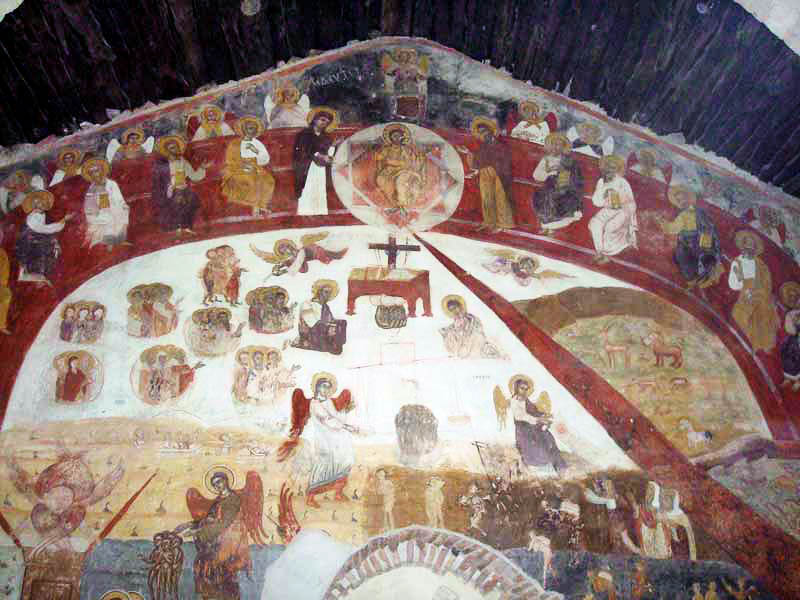
Only a few original Byzantine frescoes are preserved in the interior of the temple. Most of them belong to the XVIII century made by the students of one of the most famous iconographer of that time in Greece whose name is George Marcus. There are astounding frescos on the wall depicting the Last Judgment, human sorrow, the holy apostles, bishops, deacons.
These beautiful frescos are in a delicate state which explains why the church is now under the protection of the Institute of Archeology.
This also explains why the liturgy and other religious events are not conducted inside the church anymore. Additionally, it is forbidden to light candles and take photos inside. Visiting of the church is only possible by appointment with an official from the Institute.
We recommend you take our tour Wine and Culture in which you will have the special opportunity to enter the Taxiarchis Church and experience its spiritual essence.


